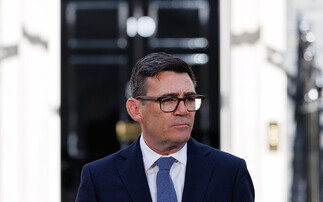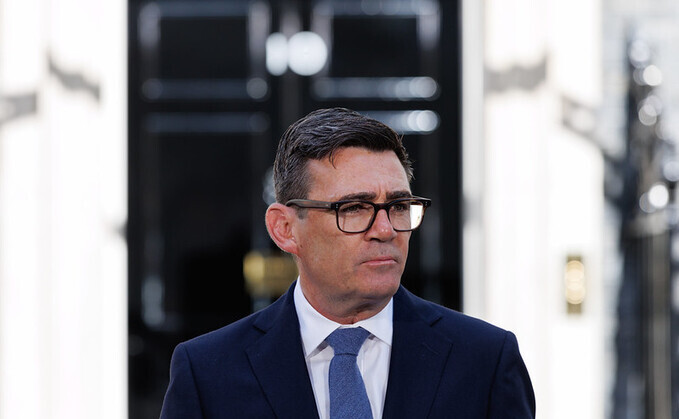
Credit: Lauren Hurley / No 10 Downing Street
Speculation has mounted that prime minister Andy Burnham could look to introduce a 10% levy on all estates as he looks to tackle rising social care costs.
Work and pensions secretary Pat McFadden this morning (28 July) dodged a Sky News question on reports that Burnham could look to introduce a 10% levy on all inheritances to fund social care.
Burnham is expected to talk about social care, a "subject that's been close to his heart for many years", tomorrow, McFadden said in response.
McFadden added that there have been "many attempts to tackle this over the years, and they haven't really come to anything".
"He [Burnham] is determined, as he said, to put political capital into this, to put political energy into this, so we have to wait to see what he says in his speech tomorrow."
"I can't tell you today [what it will mean], but what I can tell you is that this is a long-term challenge that's faced the country for an awfully long time," McFadden said. "It hasn't really been tackled in a fundamental way yet, but he is determined that in his time as prime minister, he's going to face up to this long-term challenge, and he'll have more to say about that tomorrow."
The Telegraph reported yesterday (27 July) that, asked whether he was committed to a 10% inheritance levy, the prime minister's official spokesperson said: "I'm just not going to get ahead of his update on this issue, which will come later in the week."
The spokesperson pointed to Burnham's comments that a new social care system will "take time" but that the prime minister has been "clear about the consequences" of not tackling this, giving a "sense of where his feelings lie".
Detail remains scant on the possible change, which reportedly could be intended to raise £18bn and has yet to be confirmed.
Lobbying continues on IHT on pensions
The potential shake-up of the inheritance tax (IHT) regime comes as industry lobbying has continued around un-used pension pots becoming subject to IHT from 6 April 2027.
IHT is payable at 40% above the £325,000 nil-rate band and £175,000 residence nil-rate band thresholds per individual.
Platforms are set to continue lobbying the government on IHT on pensions under new prime minister Burnham and chancellor John Healey, they confirmed to PA last week.
Efforts will continue to include highlighting alternatives to the regime and pushing for a pause if clear guidance is not made available in good time prior to the 6 April deadline and Burnham and Healey do not row back on the policy.
In January 2025, following the IHT on pensions announcement in the 2024 Autumn Budget, the CEOs of major platforms – AJ Bell, Hargreaves Lansdown, Interactive Investor and Quilter – wrote to then chancellor Rachel Reeves calling for the Treasury to consider "pragmatic alternatives".
Such options included using the income tax system to tax beneficiaries on death by removing the age 75 cut off, else reverting to a flat tax on death framework.
"The new chancellor should urgently revisit plans to bring pensions into IHT, which could still be amended, or paused, sparing pension savers and their families from the pain that will follow on from this ill-conceived policy," AJ Bell director of public policy Tom Selby told PA last week.
Selby pointed to "significant issues" remain with the policy in its current guise, including the likelihood that it will exacerbate probate delays.
"It isn't too late to address some of those problems and implement a more sensible tax charge which achieves the government's intended aim of bringing pension assets in line with the wider estate on death, but does so in a much simpler way that avoids creating undue difficulties for grieving families," Selby said.
Quilter retirement specialist Adam Cole said that Quilter will continue to encourage the government to work with the industry to build a regime that operates "as efficiently and fairly as possible".
"If HMRC systems and guidance aren't available sufficiently in advance of April 2027 for the industry and legal personal representatives to adopt it would be better to defer the implementation," Cole added. "The focus should be on minimising unnecessary bureaucracy, avoiding delays in paying benefits to beneficiaries and ensuring the system does not create unintended consequences for retirement planning."
Read more: Professional Adviser's IHT hub